

Air freight is a critical part of global supply chains, especially on busy routes like Asia–Europe. Freight aircraft (also called cargo planes or freighters) carry goods at high speed between continents. As Airbus notes, “freighter aircraft are vital to our daily lives” because they transport everything from online purchases and medical supplies to industrial machinery across the globe. For Asia–Europe shipments, these planes help businesses meet tight schedules and reach distant markets quickly. Airlines are adding new freighters to meet growing demand – for example, Airbus forecasts that the rise of e-commerce means thousands of additional freighters will be needed worldwide over the next 20 years. In short, air freight offers unmatched speed and reliability, making it the preferred choice for urgent or high-value cargo that must move fast.
Freight aircraft come in many designs and sizes. The next sections explain what a freighter aircraft is, the main cargo plane categories (by configuration and size), and how carriers match aircraft to Asia–Europe shipping needs. We will also cover the types of goods commonly flown and key factors in choosing the right cargo plane.
A freighter aircraft (freight airplane or cargo plane) is an airplane built or modified specifically to transport goods instead of passengers. According to Airbus, “a freighter aircraft… is designed or converted specifically for transporting goods rather than passengers”. Such planes have large cargo doors and reinforced floors optimized for pallets and containers. In practice, freighter aircraft fall into three main categories: dedicated freighters (built as cargo planes from the start), converted freighters (passenger jets converted to carry freight, often called P2F), and specialized outsized freighters (for extremely large loads). All share the goal of moving goods, but each type has different capabilities and uses.
The backbone of air cargo is dedicated freighter aircraft. These jets have reinforced cargo decks, large side-loading doors, and built-in handling systems (like roller floors and winches) to move heavy pallets. For example, wide-body freighters can carry containers on both their main deck and belly deck. U.S. research notes that such freighters are purpose-built for freight: they “accommodate containerized and palletized freight on upper and lower decks” and operate on routes from short domestic hops to long intercontinental flights. They often include cargo-handling features: floors have embedded rollers and locking fittings to slide and secure freight, and some freighters even have winches to lift very heavy loads.
Converted freighters extend cargo capacity by repurposing passenger planes. The conversion process adds a large cargo door and strengthens the structure. Common airliners (once carrying passengers) are modified into freighters, giving them a second life. This is a cost-effective way to increase cargo capacity using proven airframes. Airlines operate many of these P2F jets on Asia–Europe routes when demand requires additional lift. (For instance, Airbus cites that various A320 and A330 models have dedicated P2F versions.)
Beyond all-cargo planes, there are other arrangements. A combi aircraft carries passengers in part of the main deck and cargo in the other part on the same flight. They offer flexibility when both passenger and freight demand exist on a route. Convertible aircraft can be reconfigured between all-cargo and mixed (passenger+cargo) layouts as needed. These designs are less common today but have been used in markets with variable demand. 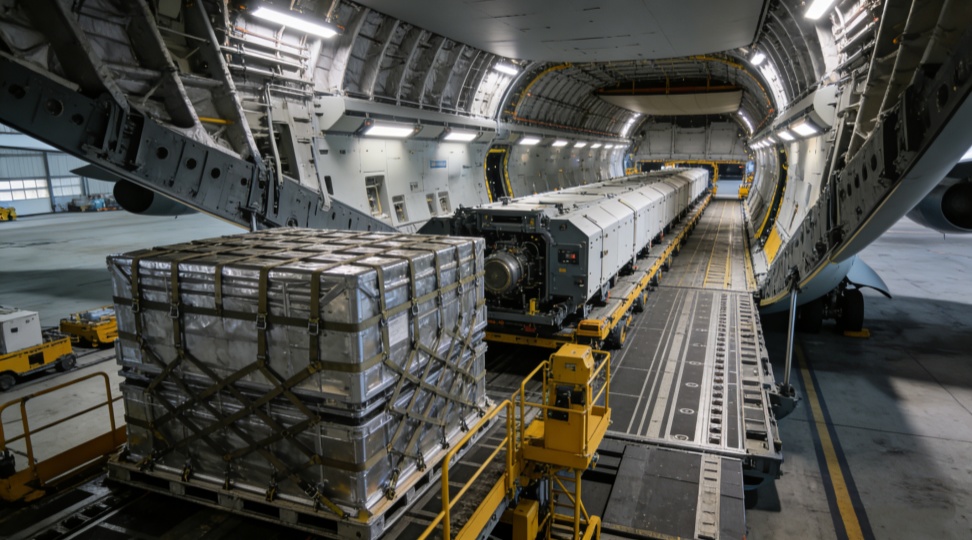
Additionally, almost all passenger jets carry some cargo in their belly holds (under the cabin). Wide-body airliners often devote entire belly sections to freight when passenger baggage is light. In fact, recent data show that about 56% of international air cargo capacity comes from passenger-plane belly space, while dedicated freighters provide 44%. In other words, passenger flights account for a large share of cargo transport. However, passenger aircraft have smaller doors and floors designed for baggage, so only boxed or containerized goods fit in their holds. Dangerous or oversized cargo is typically restricted to freighters.
Freight planes vary widely in size and range. Some carry hundreds of tonnes across oceans; others serve short feeder routes with just a few tonnes. In general:
Wide-body freighters (twin-aisle) – These are the largest cargo jets. They have two aisles and carry freight on both the main deck and belly. They fly long-haul routes (such as nonstop Asia–Europe flights) with very heavy or bulky loads. For example, wide-body freighters can transport dozens of standard pallets across continents. U.S. aviation research notes that wide-body cargo planes “accommodate containerized and palletized freight on upper and lower decks” and are used for services ranging from domestic to intercontinental. These planes often require long runways but offer huge payload capacity.
Narrow-body freighters (single-aisle) – These smaller jets carry freight only on the main deck (and limited belly space). They typically serve medium-range routes or connect regional cities. Narrow-body cargo jets are common for shorter Asia–Europe legs or intra-Asia runs. TRB research describes them as serving primarily domestic and shorter international routes. Their payload is lower (often 20–30 tonnes), but they are more fuel-efficient on shorter hauls. They can also use airports with medium-length runways.
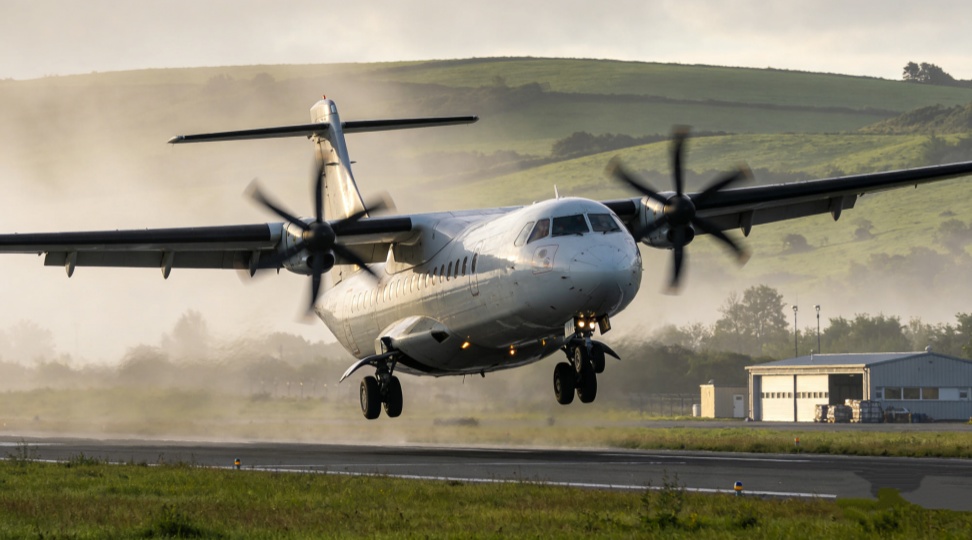
Turboprop and feeder aircraft – Express carriers often use turboprops or small piston planes to shuttle cargo between smaller markets and hubs. These aircraft carry modest loads (typically 5–15 tonnes) and can operate from short runways. They act as “feeder” flights: for example, an ATR- or Dash-8–type freighter might gather e-commerce parcels from various cities and deliver them to a major Asian hub. The U.S. Federal Aviation Administration notes that integrated cargo carriers rely on such small aircraft to connect local markets to global networks. In Asia, turboprops bring freight from cities with limited infrastructure to larger airports where wide-body freighters await.
Heavy-lift and special freighters – A few unique aircraft are built for outsized cargo (e.g., large machinery or aircraft parts). These have enormous fuselages and payloads (some exceeding 100 tonnes) but are very rare in commercial service. They fly only exceptional missions (such as space rocket parts or oversized industrial equipment). Most Asia–Europe cargo does not use these super-freighters; instead, shippers break down large items or use sea transport.
The table below summarizes these categories:
| Category | Typical Payload | Main Use |
|---|---|---|
| Wide-Body Freighters | 60–140+ tonnes | Long-haul international routes; very heavy and large shipments. |
| Narrow-Body Freighters | 20–30 tonnes | Short- to medium-haul routes; regional and express cargo. |
| Turboprop/Feeder Aircraft | 5–15 tonnes | Short hops to/from smaller airports; fast parcels and local freight. |
| Combi/Convertible Aircraft | Varies | Mixed passenger + cargo loads (flexibility for demand). |
| Passenger Jets (belly cargo) | Varies | Extra cargo space on passenger flights. |
| Heavy-Lift Freighters | 100+ tonnes (specialized) | Oversized industrial cargo (rare, special projects). |
On the Asia–Europe corridor in particular, wide-body long-range freighters dominate the long-haul segments. Medium freighters and even passenger planes with cargo hold space handle shorter legs. Regional turboprops feed cargo to major hubs, and special charter jets are available for extra-large loads or urgent needs.
Air freight typically carries goods that are high-value, time-sensitive, or both. Common examples include:
Electronics and high-tech products: Smartphones, semiconductors, laptops,s and other gadgets often fly by air to meet just-in-time manufacturing and consumer demand.
Pharmaceuticals and medical supplies: Medicines, vaccines, and life-saving equipment need fast transit under controlled conditions. Shippers rely on freighters to move these critical goods quickly.
Fashion and luxury items: Clothing, accessories, and luxury goods (handbags, jewelry, etc.) have high value and seasonal demand. Air shipments ensure products reach retailers in time.
Perishables: Foodstuffs like fruits, vegetables, seafood, and flowers rely on air transport to stay fresh on long journeys. Rapid delivery minimizes spoilage.
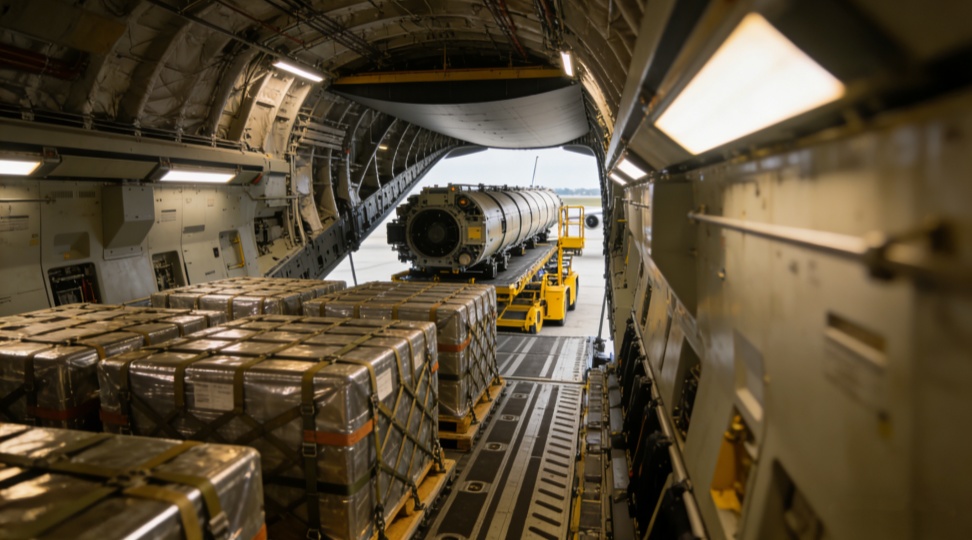
In Airbus’s words, cargo planes transport “electronics, pharmaceuticals, luxury goods, [and] time-sensitive… perishables” among other items. In Asia–Europe trade, typical air cargo includes consumer electronics (for example, gadgets made in China), automotive parts, machinery components, and even live animals (like breeding livestock or zoo animals) or mail. On the other hand, heavy bulk commodities (coal, grainrarelyer use air; they ship by ocean instead.
Aircraft often carry just a fraction of the goods by weight but a large fraction by value. For example, a major trade report found that belly holds of passenger jets accounted for about 56% of air cargo capacity in 2025, with dedicated freighters carrying 44%. This underscores that both passenger and freight airplanes are essential to meeting demand.
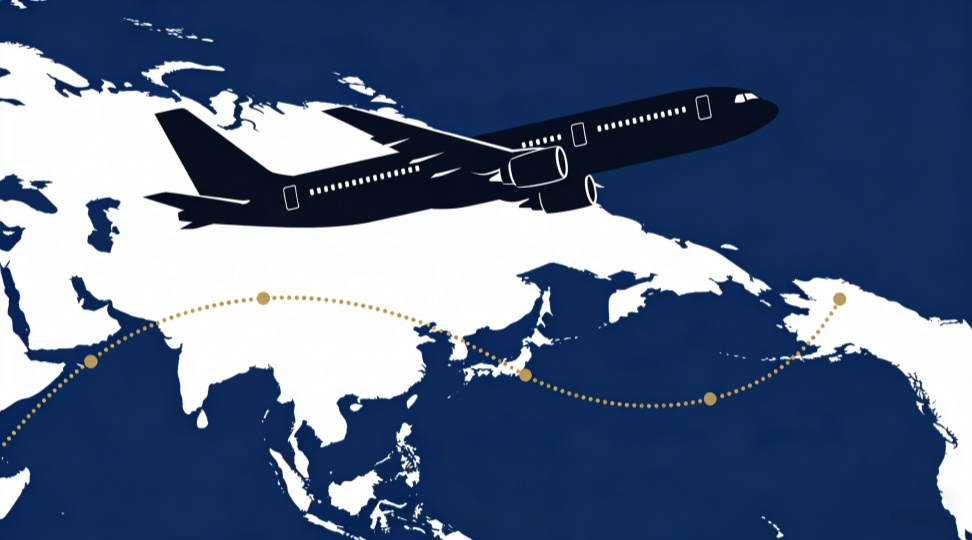
The Asia–Europe airfreight corridor is one of the busiest in the world. Goods flow between Asian manufacturing hubs (China, Southeast Asia) and European markets on regular flights. Asia to Europe flights carry electronics, textiles, machinery, and e-commerce shipments; Europe to Asia flights carry luxury goods, machinery parts, and specialized equipment.
Recent industry data highlight the strength of this trade lane. Analysts report that “the Asia–Europe corridor has emerged as the standout performer in global air cargo,” with growth fueled by pharmaceuticals and high-tech products. In mid-2025, IATA found Asia–Europe air freight grew about 10.5% year-over-year, the highest rate among major trade routes. This reflects strong demand for time-sensitive goods like electronics and medicine on that route.
Major cargo hubs anchor the network. Hong Kong International Airport alone handled 4.3 million tonnes of freight in 2023 (making it the world’s busiest cargo airport). Other key hubs on Asia–Europe routes include Shanghai, Singapore, Seoul, and (in Europe) Frankfurt, Amsterdam, and Leipzig. Freight from secondary cities often moves via these hubs: for example, a shipment from Bangkok might fly to Hong Kong on a regional jet, then on a wide-body freighter to Frankfurt. Carriers flying Asia–Europe include global cargo airlines (Cathay Cargo, Korean Air Cargo, etc.) and integrators (FedEx, UPS, DHL). These airlines deploy large twin-engine freighters (e.g., Boeing 777F, Airbus A330F) on nonstop Asia–Europe routes, while smaller freighters or charter services handle niche markets.
In summary, Asia–Europe air cargo is growing steadily. Its main products – electronics, pharmaceuticals, consumer goods – benefit from the speed of air transport. The corridor’s growth and the importance of high-value cargo are well documented.
Selecting the best freight plane depends onth cargo and the route. Key factors include:
Weight and volume: Does the shipment’s weight fit the aircraft’s payload limit? Will it fit through the cargo door and inside the hold? For example, very heavy or oversized loads require a wide-body freighter, while lighter parcels might go on a smaller jet.
Distance: Can the plane fly nonstop or with minimal stops? Long Asia–Europe flights typically use long-range freighters or may refuel en route at designated hubs.
Airport infrastructure: Does the origin or destination airport accommodate large freighters? Smaller airports might only support mid-size jets or turboprops.
Urgency: How fast must the cargo arrive? High-priority shipments may justify the fastest available service (even a chartered freighter).
Cost: Larger and faster planes are more expensive. A good freight forwarder will balance speed and cost – for example, using a wide-body freighter for a full pallet load but a passenger flight’s belly for lighter cargo if time permits.
Working with an experienced freight forwarder simplifies these choices. For instance, DR Trans assists customers in matching cargo to the optimal aircraft and service. Their logistics experts evaluate the shipment’s dimensions, weight, and value, then recommend the right type of cargo plane (and airline route). They handle booking (scheduled freighter or charter), paperwork, and special handling requirements. In practice, a customer shipping urgent electronics from Shanghai to Frankfurt would rely on DR Trans to secure space on a suitable wide-body freighter, while a less urgent parcel load might go in the belly of a passenger flight. Throughout, DR Trans “helps each customer solve transportation difficulties” by providing professional, tailored air freight solutions.
In short, choosing the right freight aircraft is about matching cargo needs to plane capabilities. The process is made easier by working with a freight specialist who understands Asia–Europe air logistics.
Q: What is a freighter aircraft?
A freighter aircraft (cargo plane) is an airplane built or converted specifically to carry goods rather than passengers. These aircraft have special features for cargo – large loading doors, reinforced floors, roller tracks, etc. – so they can handle heavy pallets or containers. In other words, a freighter is a “cargo airplane” optimized for moving goods.
Q: What types of goods are typically shipped by air?
Air freight generally carries high-value or time-sensitive items. Typical examples are electronics (smartphones, computers), pharmaceuticals (medicines, vaccines), luxury goods (fashion, jewelry), and perishables (fresh food, flowers). Air cargo also includes urgent industrial parts and e-commerce parcels. Cargo that travels by air is usually lighter and more valuable; bulk commodities tend to ship by sea instead.
Q: How do freighter aircraft differ from passenger aircraft?
Freighters are optimized for cargo: they use most of their space for freight instead of seats. For instance, a wide-body freighter can load containers on both the main deck and the belly. By contrast, passenger planes carry cargo only in their belly hold under the cabin. U.S. research notes that dedicated freighters “accommodate freight on upper and lower decks” and serve a wide range of routes, whereas passenger jets use only the belly compartments. Freighters also have cargo-specific equipment (winches, rollers) that passenger planes lack.
Q: Why use air freight over other methods?
The main advantage is speed. Air freight can cut transit times from weeks (by sea) to days or even hours. This rapid delivery lets businesses respond faster to demand and reduces inventory and storage costs. According to Airbus, freight planes enable goods to “move quickly and reliably across continents,” helping companies access international markets and meet time-sensitive needs. Air transport is also very reliable and reaches many global destinations. However, it is more expensive than sea or land shipping, so it is best for urgent or high-value goods.
Q: How do I choose the right type of freight aircraft for my shipment?
It depends on your cargo’s weight, size, and delivery deadline. Very heavy or large shipments to Europe will need a long-range wide-body freighter. Smaller or less urgent shipments might fit on a medium freighter or even in a passenger plane’s belly. Short-range regional needs may use turboprop freighters. Factors include payload, route distance, airport facilities, and cost. In practice, freight forwarders like DR Trans use their expertise to select the best aircraft and airline service to meet your requirements.
Q: How does DR Trans support international air freight?
DR Trans is a logistics provider specializing in Asia–Europe routes. They help each customer solve shipping challenges by offering professional air freight solutions. This includes arranging express or charter flights, coordinating schedules, and ensuring proper handling and customs clearance. Essentially, DR Trans leverages its global network to make sure your cargo “flies fast, safely, and on budget,” providing end-to-end support from origin to destination.
In conclusion, air cargo relies on a variety of freight aircraft, each suited to specific roles. From narrow-body freighters and regional turboprops to giant wide-body cargo jets, these plane types enable the timely delivery of goods across continents. Understanding their differences—dedicated freighters vs. belly-hold cargo, single-aisle vs. twin-aisle jets, and so on—helps businesses plan efficient shipments.
For Asia–Europe trade, large long-range freighters handle the bulk of heavy shipments, while smaller planes fill regional legs. Using air transport, shippers gain speed and reliability: as one expert notes, freighter aircraft “facilitate rapid transportation of goods over long distances,” which is vital for global supply chains. By working with experts like DR Trans, customers can navigate these options confidently. In the fast-paced Asia–Europe corridor, choosing the right cargo plane and logistics partner ensures goods move smoothly, keeping your supply chain competitive.

 IPv6 network supported