



Bottom line up front: If your cargo is high-value, time-sensitive, and your buyer has strict political-risk exclusions on Russia, the Middle Corridor deserves a serious quote. But it is not a wholesale replacement for the Northern Route. In the first eight months of 2026, Middle Corridor container volumes grew 11% year on year — yet the eastbound-to-westbound ratio sits at roughly 1:4. For every four containers heading west, only one comes back. That imbalance shapes everything from rate negotiation to equipment availability. Plan around it, not against it.
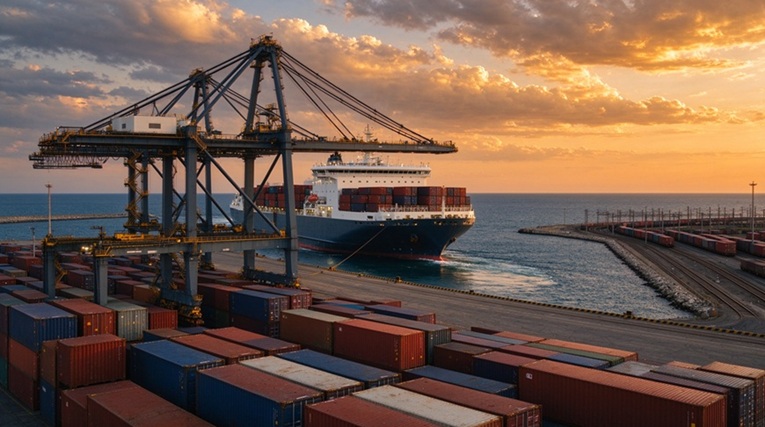
Public sources disagree, and the gap matters. Some official corridor descriptions put Middle Corridor transit at 12–18 days, while operational feedback can be considerably more conservative. Door-to-door delivery times depend on origin and destination, ferry schedules, border processing, and inland connections.
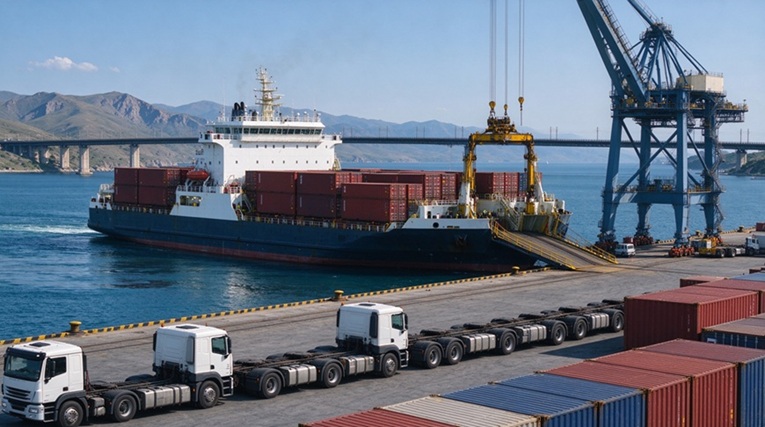
The difference comes partly from transshipment at the Caspian. Cargo is unloaded from rail at Aktau or Kuryk, ferried across the Caspian, and reloaded onto rail at Alat. These additional interfaces can introduce waiting time, even as infrastructure and operational coordination improve.
For a broader assessment of these bottlenecks, see the OECD analysis of Middle Corridor transit delays and infrastructure constraints. The World Bank's Trans-Caspian Transport Corridor report also examines the infrastructure and coordination improvements needed to make the route more predictable.
Action point: Ask your forwarder for measured door-to-door transit, not just "rail segment transit." Confirm explicitly whether Caspian waiting time, port handling, customs clearance, and final-mile delivery are included in the estimate.
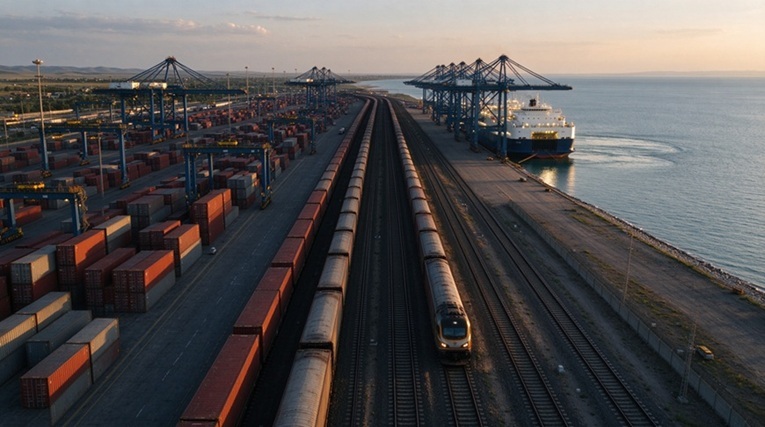
Some operators describe the two routes as broadly comparable on freight rates, and certain southern services may be competitive depending on the shipment. But the headline rate is only part of the calculation.
The Middle Corridor is multimodal by nature, which means additional handling stages: port handling fees, ferry charges, transit fees, and multi-country customs documentation. The OECD's assessment of the Middle Corridor discusses how infrastructure limitations and coordination problems affect its competitiveness.
Compare these costs against the full price of Northern Route transportation, rather than comparing individual rail segments.
Action point: Demand a segmented quote covering China–Kazakhstan rail, Caspian ferry, Azerbaijan–Georgia–Türkiye transport, customs formalities, and final delivery. Compare it with an all-in Northern Route quote. If a forwarder gives you one lump sum, ask for a clear breakdown of included and excluded charges.
For shippers comparing China–Russia road and rail options, DR Trans also provides information on China to Russia shipping costs and transit times.
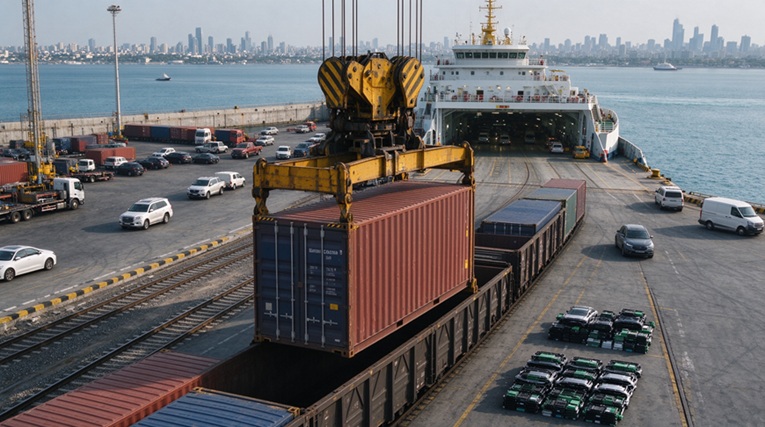
This is one of the most important structural issues on the corridor. According to September 2026 reporting by Report.az, the Middle Corridor handled 53,574 TEU in January–August 2026, up 11% year on year.
Westbound traffic reached 42,642 TEU, compared with 10,932 TEU eastbound — approximately a 3.9:1 imbalance. In other words, eastbound volumes were only about one-quarter of westbound volumes.
That imbalance can affect equipment positioning, container availability, and the economics of return movements. However, the impact on any individual shipper's rate depends on the equipment type, lane, season, and carrier's commercial arrangements.
There have been signs of growing efforts to attract return cargo, but isolated services should not be treated as proof that the imbalance has been resolved.
Action point: If your business ships goods from Europe or Türkiye to China or Central Asia as well as in the opposite direction, use those volumes as a potential negotiation advantage. Bundle eastbound and westbound requirements into one discussion and ask operators whether they can offer better terms for balanced flows.
Prioritize the Middle Corridor: Consider high-value industrial goods, automotive components, electronic components, and shipments for which the buyer requires supply-chain diversification or excludes certain transit jurisdictions. These shipments may justify a higher transport cost when route eligibility, insurance, and contractual requirements favor the southern alternative.
For sensitive cargo, route selection must also account for commodity-specific restrictions. For example, DR Trans has published a case study on lithium battery shipping to Russia. The applicable route and documentation must be checked against the cargo classification and the rules in force for every transit country.
Consider the Northern Route: For cargo destined for Russia or Belarus, direct China–Russia or China–Belarus services may be more practical, subject to current route availability, sanctions restrictions, insurance, and customs requirements. Rail can also remain suitable for shipments where its price, capacity, and schedule fit the delivery window.
For urgent China–Russia road freight, compare the route and service details on the DR Trans China–Russia TIR transport services page.
Hold your decision: For medium-value, non-urgent cargo without a mandatory political-risk exclusion, compare the complete landed logistics cost before switching routes. The Middle Corridor's competitiveness depends on the origin, destination, handling requirements, and the reliability of connections between individual transport legs.
The World Bank's corridor research outlines the infrastructure investment and operational reforms needed to improve transit times and capacity. These developments are worth monitoring, but future improvements should not be treated as guaranteed current performance.
The Middle Corridor crosses multiple jurisdictions, including China, Kazakhstan, Azerbaijan, Georgia, and Türkiye, with Caspian Sea transport connecting the relevant rail networks. Depending on the chosen route, additional countries, ports, and customs procedures may be involved.
Each jurisdiction can impose its own declaration, transit, inspection, and documentation requirements. The World Bank's analysis of the Trans-Caspian Transport Corridor identifies cross-border coordination, digital integration, and port efficiency as important areas for improvement.
Do not assume that a TIR arrangement on one section automatically covers every subsequent sea, rail, or road leg. The scope of the applicable customs transit procedure must be verified for the specific shipment and route.
Action point: Confirm that your forwarder can coordinate customs and transit formalities in the relevant countries, including Azerbaijan and Georgia where applicable. Ask who is responsible for each declaration, who manages the ferry and port handoffs, and who resolves documentation problems if a shipment is held.
For background on customs documentation and transport planning for Russia-bound cargo, consult the DR Trans guide to transportation and customs clearance for imports from China to Russia.
In 2026, the Middle Corridor is a serious alternative worth pricing properly — not a primary route to switch to blindly. Use it to diversify eligible supply chains, meet a European customer's route requirements, and explore opportunities created by imbalanced cargo flows.
But do not assume it is faster, cheaper, or simpler just because it bypasses Russia. Compare the actual door-to-door schedule, all-in transport cost, equipment availability, customs responsibilities, and insurance conditions before making a decision.
For businesses evaluating multiple China–Europe and China–Russia logistics options, DR Trans provides international road and rail transport solutions.
Need a route comparison? Send DR Trans your origin, destination, cargo type, shipment volume, and target delivery date. We can help you assess the available transport options and identify the information needed for a meaningful, itemized quotation.
Request a China–Russia TIR transport quote

 IPv6 network supported