


When shipping goods from China to Russia, choosing the right transportation method can make a significant difference to delivery time, logistics costs, and supply chain efficiency.
For many importers, LCL (Less than Container Load) and FCL (Full Container Load) are familiar shipping options. LCL allows businesses to share container space with other shipments, while FCL provides an entire container for one shipment. Both can be effective for international freight, but they may not be the best choice when cargo needs to arrive quickly.
For urgent shipments, TIR road transport can offer a faster and more flexible alternative. By using international road freight and an appropriate customs transit procedure, businesses can reduce certain waiting and handling stages associated with other shipping arrangements.
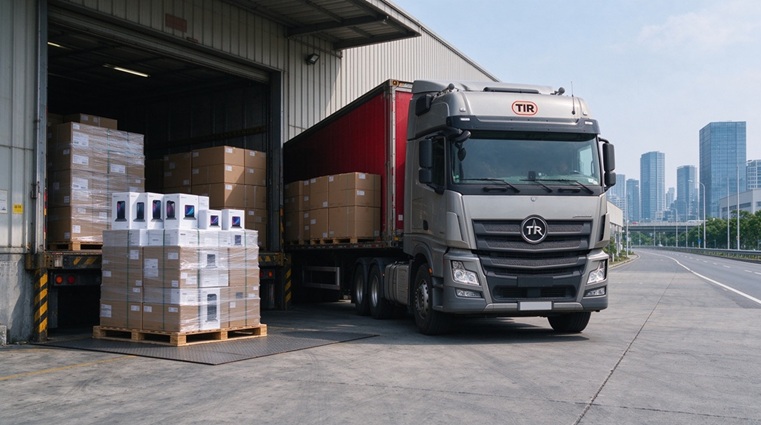
In this guide, we compare LCL and FCL shipping from China, explain the factors that affect transit time, and explore when TIR transport is worth considering for urgent cargo destined for Russia.
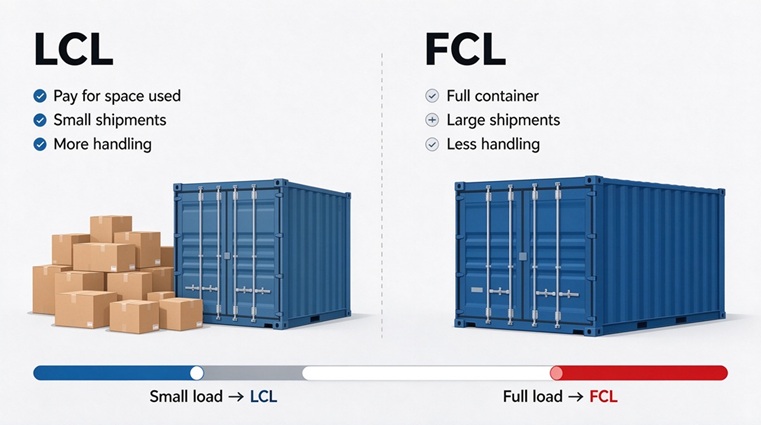
Before choosing a shipping method, it is important to understand how LCL and FCL work.
LCL stands for Less than Container Load. It is designed for shipments that do not require an entire container. Your cargo is consolidated with goods from other shippers and transported together.
LCL is often suitable for small and medium-sized shipments, especially when a business does not have enough goods to fill a container.
Advantages of LCL shipping:
Pay for the space your cargo occupies rather than an entire container.
Suitable for smaller shipments and regular inventory replenishment.
Avoid paying for unused container capacity.
Flexible for businesses importing different products in smaller quantities.
Potential disadvantages:
Cargo may need to wait for consolidation before departure.
Additional handling may be required at consolidation and deconsolidation facilities.
Delivery schedules can depend on the readiness of other shipments.
Handling and transfer stages may increase the risk of delays.
For businesses with flexible delivery deadlines, LCL can be a cost-effective option. However, if a shipment is urgently needed for a product launch, seasonal sales campaign, or production schedule, waiting for consolidation may become a disadvantage.
FCL stands for Full Container Load. One shipper books the entire container for their cargo, even if the container is not completely full.
FCL is commonly used for large-volume shipments, bulk orders, and cargo that benefits from being loaded together in a dedicated container.
Advantages of FCL shipping:
The container is dedicated to one shipment.
Less consolidation and deconsolidation handling is generally required.
Suitable for large shipments and high-volume orders.
Can offer better cost efficiency per unit when the container is well utilized.
Potential disadvantages:
The shipper pays for the container capacity, including unused space.
Container availability and departure schedules can affect planning.
Terminal handling, transshipment, customs clearance, and inland transportation may add time.
A dedicated container does not automatically mean faster delivery.
FCL may be the right choice for large shipments, but it does not eliminate the time required by the selected transport route or shipping schedule.
LCL and FCL describe how cargo occupies container space. TIR, by contrast, refers to an international customs transit system used for qualifying cross-border road transport. In practical logistics planning, TIR road freight is a different transport solution from conventional container shipping.
Here is how the options compare.
| Factor | LCL Shipping | FCL Shipping | TIR Road Transport |
|---|---|---|---|
| Cargo arrangement | Shared container | Dedicated container | Road vehicle or suitable transport unit |
| Best suited for | Smaller shipments | Larger shipments | Time-sensitive road freight |
| Consolidation waiting | May be required | Usually not required for other shippers' cargo | Depends on the service and loading plan |
| Handling stages | May involve consolidation and deconsolidation | Depends on the route and terminal arrangements | Can reduce intermediate handling on suitable routes |
| Departure flexibility | Depends on consolidation and schedules | Depends on container and service availability | Depends on vehicle availability and border conditions |
| Urgent delivery | Depends on the service schedule | Depends on the route and schedule | Often worth considering for urgent shipments |
| Typical decision factor | Shipment size and cost | Volume and unit cost | Delivery deadline and route suitability |
The key point: TIR is not automatically faster than every LCL or FCL service. Its advantage depends on the origin, destination, road route, border conditions, cargo requirements, and the time needed to prepare the shipment.
For urgent cargo from China to Russia, a direct or well-organized road freight solution can be particularly attractive when waiting for a scheduled departure or additional handling would put the delivery deadline at risk.
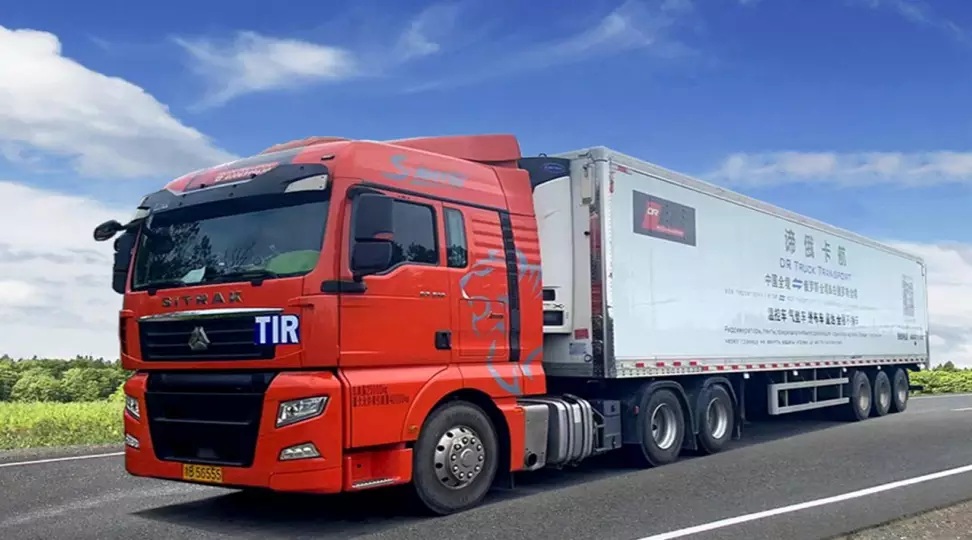
One of the potential disadvantages of LCL shipping is that cargo may need to be consolidated with shipments from other customers before departure.
If your goods are ready but the consolidation process is incomplete, the shipment may have to wait.
A suitable TIR road freight service can be organized around the cargo's readiness and the agreed transport schedule. Depending on the service, this can reduce the need to wait for a shared container to be filled or prepared.
This is especially useful when shipping:
Products required for an upcoming sales campaign.
Urgent inventory replenishment for distributors.
Spare parts needed to avoid production downtime.
Commercial samples and time-sensitive business goods.
A shipment's total delivery time includes more than the time spent moving between two locations. It can also include loading, terminal handling, transfers, customs procedures, and final delivery.
Some container shipping arrangements involve multiple transport stages or transfers between different modes. Each stage must be coordinated, and delays at one point can affect the overall schedule.
Where the route and cargo permit, TIR road transport can provide a more direct movement plan between the loading point in China and the destination in Russia.
Fewer intermediate handling stages can help simplify coordination and reduce certain sources of delay. However, road transport remains subject to border congestion, road conditions, weather, and customs requirements.
For importers, the value of faster delivery is often greater than simply receiving goods earlier.
A delay can affect warehouse replenishment, product availability, marketplace sales, customer commitments, and cash flow.
For example, a Russian distributor preparing for a seasonal promotion may need inventory to arrive before a fixed sales date. A manufacturer may need replacement parts before an assembly line can resume normal operation.
In these cases, logistics planning should start with the delivery deadline rather than the lowest freight rate.
A TIR road freight solution may be worth evaluating when a predictable delivery plan and shorter transit time are priorities.
Cargo handling is another factor to consider when comparing shipping options.
Depending on the route, LCL cargo may pass through consolidation facilities, container terminals, and deconsolidation warehouses. FCL cargo may also require terminal operations or transshipment, depending on the service.
A suitable road freight arrangement can reduce some of these intermediate steps.
This may be beneficial for packaged commercial goods, retail inventory, equipment, and other cargo that needs careful handling. The actual handling requirements depend on the type of goods, vehicle, route, and loading plan.
Transit time varies according to the origin, destination, transportation method, border conditions, customs procedures, and cargo readiness.
For planning purposes, the following approximate transit times can be used for the corresponding China–Russia services:
| Transport Method | Approximate Transit Time | Best Suited For |
|---|---|---|
| TIR road transport | 8–14 days | Urgent cargo and time-sensitive deliveries |
| Rail freight | 18–25 days | Planned shipments and regular replenishment |
| Conventional road freight | 20–25 days | Shipments suited to the available road freight service |
These are indicative service times, not universal guarantees. Actual delivery schedules must be confirmed for the specific route and shipment.
LCL and FCL are loading arrangements rather than transport modes in themselves. Their total delivery times depend on whether the container moves by sea, rail, road, or a combination of modes. Consolidation, departure schedules, port or terminal handling, and final delivery can also affect the result.
For urgent China-to-Russia shipments, the important comparison is therefore not simply LCL versus FCL. It is the complete door-to-door delivery time of each available logistics solution.
There is no single shipping method that is best for every business. The right choice depends on shipment volume, delivery deadlines, cargo characteristics, and budget.
Your shipment is too small to justify an entire container.
The delivery deadline is flexible.
Reducing unused container capacity is a priority.
The available consolidation schedule meets your requirements.
You have enough cargo to justify a dedicated container.
You want to keep your shipment in one container during the relevant transport stages.
Your order volume supports the cost of the container.
The planned departure and arrival schedule fits your inventory plan.
Your goods need to reach Russia within a relatively short timeframe.
Waiting for consolidation or a scheduled container service could cause problems.
You are replenishing fast-moving inventory.
A delay could affect production, sales, or contractual delivery commitments.
Your cargo and destination are suitable for the available road freight service.
For many businesses, the best approach is to compare more than one option. Routine inventory may be sent by rail or container, while urgent replenishment orders are assigned to road freight when the deadline justifies the cost.
This balanced approach can help businesses manage both logistics expenses and delivery risk.
Although TIR road transport can be advantageous for urgent cargo, the actual transit time depends on several operational factors.
Border crossing conditions: Traffic levels, inspection requirements, and border procedures can affect the journey.
Customs documentation: Incorrect or incomplete invoices, packing lists, cargo descriptions, or other required documents may delay processing.
Cargo readiness: Goods must be packed, labeled, documented, and ready for loading before the agreed departure.
Route and destination: Delivery to Moscow may follow a different schedule from delivery to another Russian city or region.
Cargo type: Dimensions, weight, packaging, and regulatory requirements can influence vehicle selection and transport arrangements.
Seasonal demand and weather: Peak shipping periods and adverse weather can affect capacity and transit time.
To reduce the risk of delays, importers should prepare the required documents in advance, confirm cargo readiness, and obtain a route-specific transit estimate from their logistics provider.
Choosing a suitable transport mode is only one part of efficient logistics planning. Businesses can also take the following steps to reduce avoidable delays.
Confirm the commercial invoice, packing list, product descriptions, quantities, weights, and other required shipping or customs information in advance.
Tell your logistics provider when the goods must arrive and explain why the date matters. A fixed deadline allows the provider to evaluate suitable routes and available services.
Do not compare only the main transport leg. Ask about loading, consolidation, border processing, terminal handling, customs clearance, and final delivery.
Do not automatically use the same method for every order. LCL may suit small shipments with flexible schedules, FCL may be appropriate for large volumes, and TIR road transport may be more suitable for urgent deliveries.
Check which services are included, where responsibility transfers between parties, and whether customs-related services, terminal charges, or final delivery are covered.
A clear quotation and realistic schedule help businesses avoid unexpected costs and reduce uncertainty.
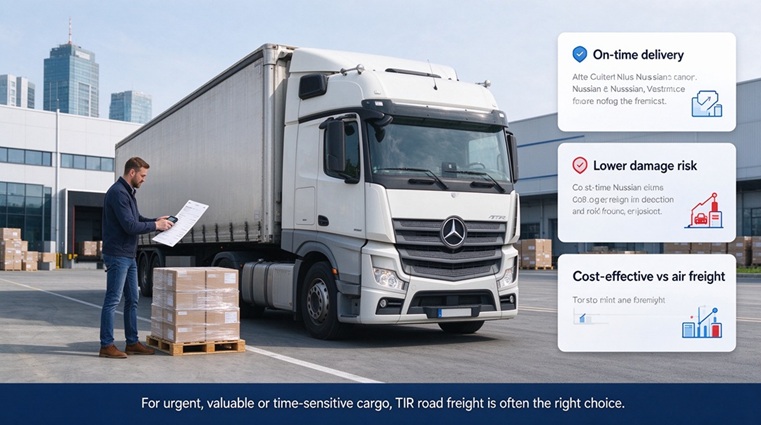
If you are comparing LCL and FCL shipping from China to Russia, consider the complete delivery schedule—not just the container size or freight rate.
For urgent shipments, TIR road transport may offer a more suitable balance of speed, flexibility, and operational control. With indicative transit times of 8–14 days on applicable services, it is worth evaluating when a shipment cannot wait for a longer transport schedule.
DR Trans can help you assess the available transportation options based on your cargo, origin, destination, and delivery deadline.
Request a shipping quotation and provide the following details:
Cargo type and description.
Number of packages, total weight, and dimensions.
Loading location in China.
Delivery city or address in Russia.
Required delivery date.
Any special handling or documentation requirements.
With these details, your logistics provider can evaluate suitable options and provide a more accurate transit estimate.
Need to move urgent cargo from China to Russia? Contact DR Trans to discuss whether TIR road transport, rail freight, or another shipping solution best fits your shipment.
It can be, depending on the route and service. LCL may require consolidation and deconsolidation, while a suitable TIR road freight service may provide a more direct transport plan. Compare the full door-to-door schedules before making a decision.
Not in every case. FCL can be efficient when a container is ready to depart on a suitable schedule. TIR may be more attractive when road transport offers a shorter overall route or avoids waiting for a container service. The origin, destination, border conditions, and cargo requirements all matter.
For applicable services, the indicative transit time is approximately 8–14 days. The actual schedule depends on the route, cargo readiness, border conditions, documentation, and destination. Confirm the expected transit time for your particular shipment.
LCL can be more economical for smaller shipments because you pay for the space used rather than an entire container. However, handling charges, minimum fees, cargo volume, and destination costs can affect the final price. A quotation is the best way to compare the total cost.
Not necessarily. A lower freight rate may come with a longer delivery time or greater schedule uncertainty. If a delay could cause lost sales, missed deadlines, or production disruption, compare the total business cost of the shipment—not just the transportation price.
Yes. Many importers use a mixed logistics strategy, sending planned inventory by rail or container and using road freight for urgent replenishment. The best combination depends on demand forecasts, shipment size, delivery deadlines, and budget.
Final Recommendation: LCL and FCL are useful options for managing container capacity and shipping costs. When delivery speed is the priority, TIR road transport deserves consideration as an alternative for suitable China-to-Russia shipments. The right choice is the one that meets your deadline at an acceptable total cost and with a realistic, route-specific delivery plan.

 IPv6 network supported